
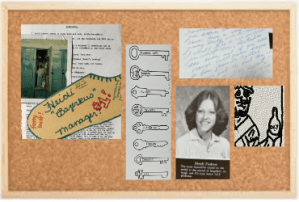
Amid controversy over school curriculum, it’s no surprise school yearbooks have been making headlines as well. We’re heading into another school year, and I wonder what messages and lessons yearbook staffers and advisers will receive as they begin the process of creating themes, covers and pages; what decisions building and district administrators will face; and how parents will respond to content.
My junior high yearbook would not have remained intact.
After stalling for at least three months, I recently opened a keepsake box my parents had unearthed from their basement. The box contained items that, laughably, no longer hold the emotional pull they had decades ago. I added these relics to the recycling bin. My junior high yearbooks, though, earned the honor of lifelong keepsakes.
Had it not been for this act of clearing out a box, these adolescent annals would have collected more dust on my bookcase shelf, next to my high school yearbooks. As I flipped through the pages, my eyes widened when I read captions and saw unflattering cartoon caricatures of teachers, including one of a teacher rendered with a bottle of beer. I saw my junior high memories through the lens of a retired principal, teacher, and former yearbook adviser. My jaw dropped as I read the caption, Smile, Mr. –, under a photo of a teacher’s backside. My jaw dropped again when I read captions like, The inmates and Waiting for the prison bus describing a group of students. A crowd of females depicted with a caption, Out in the pasture, was just as awful as the prison commentary. Anyone over fifty knows firsthand that humor has changed for the better. Captions like these are no longer funny. Let’s face it. They weren’t funny back then.
Despite the jaw-dropping captions, I don’t recall anyone storming our school or school board meeting to demand the yearbook be redacted, reprinted, or otherwise edited. Instead, students enjoyed the opportunity to exchange yearbooks to write messages to each other and now the books sit on our shelves with all pages intact.
Small percentage stalls distribution for all.
When I have read articles in the news about present-day yearbook controversies and parents demanding reprints to remove what they deem “inappropriate content,” conversations I’ve had with parents replay in my mind. In some of the articles, phrases like “several parents” raise my antenna. When I was a middle and high school principal, I’d heard this phrase as well. It usually amounted to less than 4 percent, meaning 96 percent were either in favor or had the parenting style of discussing their family values and explaining situations in the context of those values in their homes instead of expecting an entire school to alter its yearbook or curriculum.
To be fair, editing content goes both ways. One news report shared that a yearbook contained Photoshopped school pictures. The irony with this is that these students arrived at school wearing these outfits shown in their school pictures, so protecting children from seeing these images seemed futile.
Any child that has access to the Internet, has access to a whole host of content – some that is overwhelming and confusing. Parents rightfully want to protect their children, yet their best protection is reinforcing their children’s ability to make sense of their world. Being a discerning consumer of information is an essential skill and kids learn how to digest content -whether in print or live – which flows through a filter of their values and critical thinking. Even if a yearbook were to be reprinted, there’s no telling what friends might write or draw on the pages. Or what seniors might write in their underground senior wills.
Let’s honor the courage, time, and talent it takes to create a yearbook.
This fall, young people will attend yearbook camps or conferences to learn how to create a book that reflects a school year, while maintaining the standards and values adopted at each school. It’s a delicate balance and challenging to achieve, especially in our current social climate.
Let’s hope at the fall yearbook camps and conferences, advisers and students bolster their courage as they’re compressed between dissenting opinions and can produce yearbooks that reflect the school year, free of insults and inclusive of all students and staff. Let’s hope they get a variety of perspectives from other yearbook staffers to make sure a superlative, caption or image is respectful. I learned a useful adage while earning my journalism degree: “When in doubt, leave it out.” Let’s hope parents prepare their children to cope with dissenting messages without having to interfere with yearbook production and distribution. Demanding edits robs students of the opportunity to fully participate in an annual tradition, such as having enough time to write in each other’s yearbooks, and robs a yearbook staff of celebrating the completion of a yearbook that reflects their school experience.
Sources included:
“Inappropriate superlatives prompt recall of California high school yearbook”
“Florida School Offers Yearbooks Omitting LGBTQ+ Content After Backlash”
“Florida high school alters 80 ‘immodest’ yearbook photos of students”
“Florida students win in yearbook disagreement over ‘Don’t Say Gay’ bill”
“‘Disturbing’ content in yearbook sparks controversy: ‘What kind of sicko?’”
 Fedore Writer
Leave a comment