

When my hands plunge into the soil, when I bend to pick strawberries and blueberries, reach into a tree to pluck peaches, or snip a head of lettuce, I’m reminded of the origins of food.
In the garden, I’ll smile as I recall a conversation, probably in 2003, when I taught English at West Seattle High School. Four teachers and I formed an Environmental Science Academy, which was a school within a school. One of the science projects was for students to grow vegetables in a garden on campus.
With students gathered around, a science teacher pulled the first carrot of the crop and offered it to a student.
“I’m not eating that carrot,” the student said.
The teacher asked, “Why not?”
“It was in the dirt,” she said. “I’m not eating it.”
“Where do you think carrots come from?”
“The grocery store.”
The teacher was still holding the carrot in his open palm. “Where do you think grocery stores get their carrots?”
The student shrugged. “I dunno.”
“Those carrots come from the dirt.”
Another memory that comes to mind was when I was a fourth or fifth grader, I was sitting eating breakfast, wondering how factories made milk. Then, I slapped my forehead and said to myself, “Milk comes from cows. Duh.”
Do we give thought to food as we toss groceries into our cart and swipe our credit cards? I feel fortunate to be tending a garden and writing a young adult book about a dairy farm in England, which has taught me a bit about global food production––some information I wish I didn’t know. I’ll spare you the details. I’m also fortunate to have spent time on my grampy and uncle’s dairy farms when I was a schoolgirl. These farms hold fond memories and important lessons (although I had a lapse regarding milk).
I’ve learned that we’re incredibly lucky to live in the US where the food-supply chain is quite robust. During the Covid shutdowns when the infrastructure was disrupted, we were reminded of how interdependent the parts of this chain are. As we shopped, we felt the scarcity of items we’d previously taken for granted.
During the shutdown, I remember a store clerk asking me, “Did you find everything you needed?”
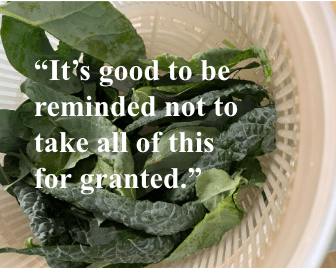
I laughed because we both knew products were absent. I said, “No. But it’s good to be reminded not to take all of this for granted.”
To help us stay grounded (pun intended), some of us tend our own gardens. Countless individuals are aware of the effort and rewards. Farmers’ markets and community gardens have made fresh, local produce available to more people, especially those that may not have yards for planting.
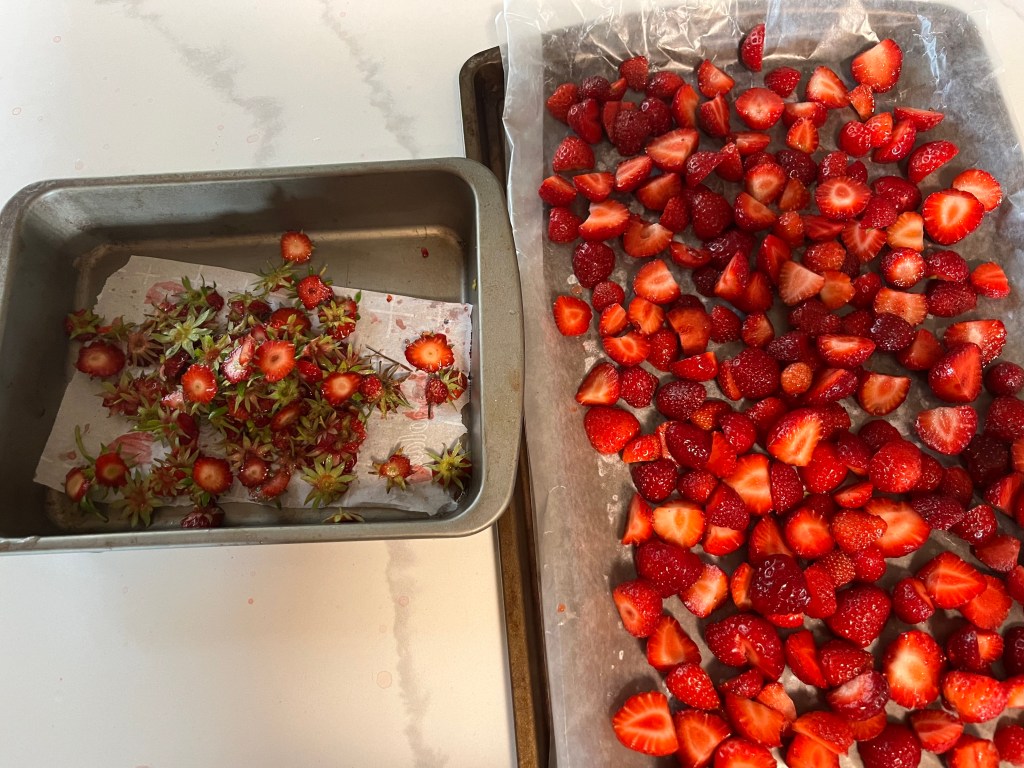
When my sister and I bought our house ten years ago, it was equipped with a small greenhouse, a compost bin, several blueberry and raspberry bushes, and at least eight raised beds, all calling to be tilled, seeded, and sown. We couldn’t have predicted that the presence of these resources would inspire us to learn about gardening and harvest produce.
Now, I’m taking this gardening craft one step further. Recently, a friend I’ve known since junior high visited and said her dad volunteered at a community garden nearby. Her dad’s generosity encouraged me to do more, so I found a local community garden and will begin helping this week. A master gardener course will be offered in 2025 and I’ll learn more skills. I’m especially excited that the Lakewood Community Gardens has a children’s garden.
Children benefit from experiencing the wonder of a tiny seed becoming a head of lettuce, a carrot, or most any vegetable imaginable. Most of us cherish memories of growing plants in our science classes, with rows of cups sitting on a shelf under grow lights or near a window. And it’s even better when it’s outdoors. My grandnephew has loved gardening with my sister and me. Last summer, he took great pride in harvesting his carrots and was fascinated, especially, by the gnarled and lumpy ones. The uglier, the better.
When we witness the origins of food, we appreciate and understand that a carrot comes from the dirt.
To subscribe to these blogs, hover near the lower right corner, and click subscribe. The tool should look like this:

 Fedore Writer
Leave a comment