
The shriek of the whistle pierced our ears. The thud, thud, thud of our sports shoes echoed in the gym; our arms trembled from supporting our torso as our legs pumped like pistons; and our PE teacher barked out, “Two hundred more to go. Keep counting!”
Thud, thud. “One.” Thud, thud. “Two.” At least thirty five of us lined up in tidy rows of junior high girls, kept our heads down, and counted like our lives depended on it.
I hated mountain climbers and days like this made me hate PE.

Over the past three decades, PE has changed for the better, but our memories remain. Recently, I spoke with four PE teachers whom I admire and asked them about their own experiences and their philosophies as teachers.
All four said that they enjoyed PE, and there were only a few memories that are still unsettling for them. Mandatory showers was a common theme.
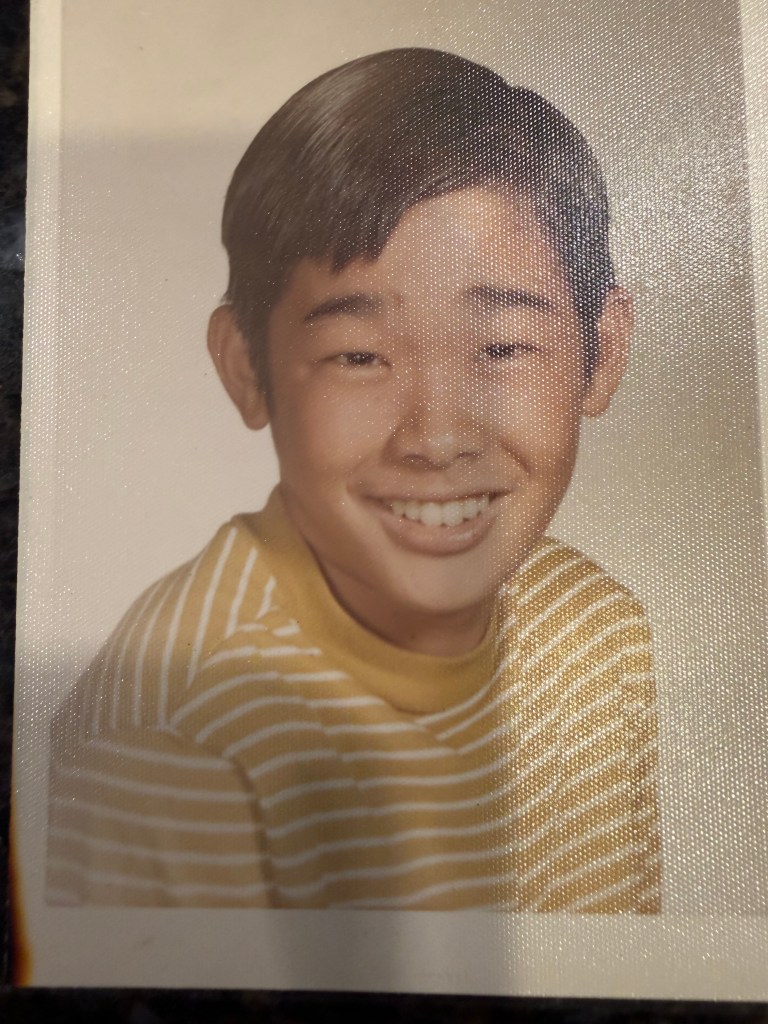
Retired PE teacher Dave Miyake (in above photo) said, “When I was in an intermediate public school, we had a very diverse group of kids. Our PE teacher was an ex-football player who was revered. He ruled by fear. Back in the day when they forced us to take showers, the teacher had a towel, and he’d give us a whack when we didn’t get into the shower. I was an athlete, and I was intimidated.” He added, “There was a lot of running—for punishment almost. It was much more militaristic.”
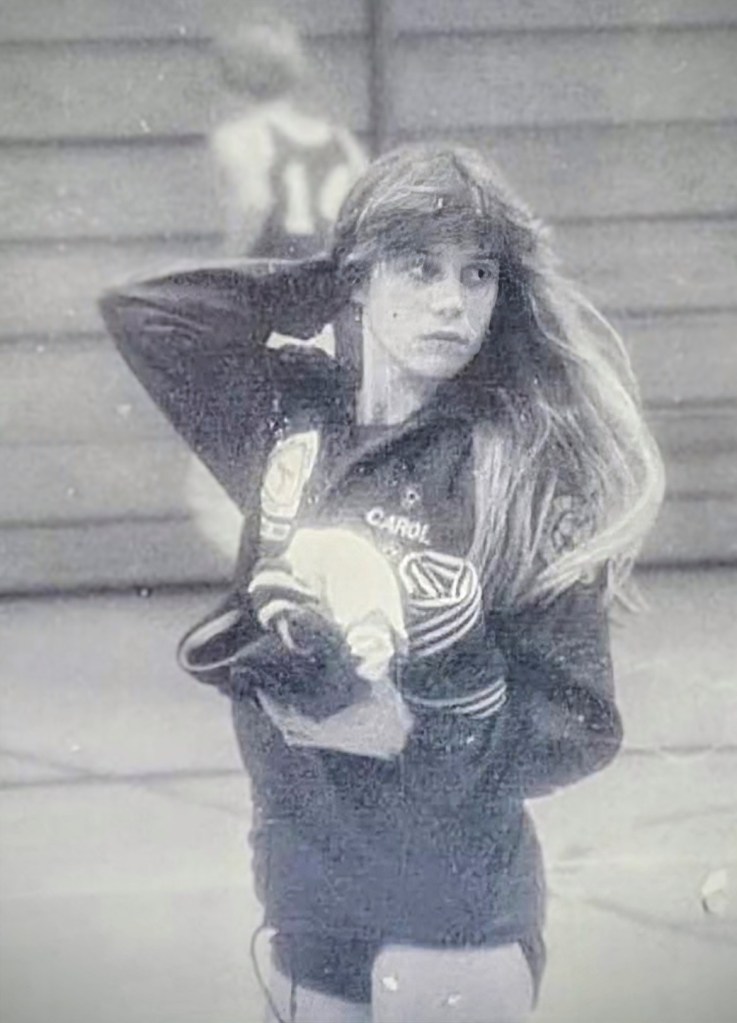
Two PE teachers and I shared that we were uncomfortable with the required showers. Carol Clingan (in above photo), who is still teaching middle school PE, said her worst memory was “in the seventh grade—the whole changing thing, undressing, and putting the towel around us… The PE teacher had to check off that we were wet from the shower.”

Retired PE teacher Lisa Halsan (in photo above) said that she loved being the PE teacher’s assistant. Though, it was hard as a TA to have kids criticize her for her role. “There was an assembly line of students going to the shower, and I had to check off the students getting a towel.”
In junior high, I pretended to have my period so I could wash up at the sink instead of taking a shower.
Luckily for students nowadays, mandatory showers were discontinued in the late 1990’s-early 2000’s to protect students’ privacy and save money on towels, maintenance, and water.
Rewards for Athleticism
During our conversations, we shared decades old memories regarding the Presidential Fitness Test, which contained a one-mile run, shuttle run, sit ups, pull ups or flexed arm hang, and pushups. Not surprisingly, the PE teachers described how important finishing in the top 85th percentile was to them.
“I remember the flexed arm hang,” Lisa said. “I wanted the school record. I had an audience, and I remember kicking and crying as I strained to hang on a little longer. I made it one second past the school record.” Lisa was laughing as she described this event. “I got my name on the board and … probably a hernia.”
Our laughter crescendo’d when she said, “We wore a onesie, with snaps and blue and white stripes.” This visual was dreadful and hilarious at once.
Dave remembers the fitness test as well. “I have fond memories—I was good at it,” he said. “What I liked about it was that it was measurable.”
While Lisa appreciated having an audience during her flexed-arm hang, this wasn’t the case for all kids.
“In elementary school, we had to sit on the floor and climb a rope,” Carol said. “Everyone was watching me.” And even though Carol successfully climbed the rope, she didn’t want the attention. “I felt sorry for kids who couldn’t make it.” Carol got quiet for a moment, then added, “Kids are sitting around watching you fail.”
Imagine, for the rest of the day, what it would have been like for those kids that publicly failed to climb the rope. Were they able to concentrate on a math skill or reading? Did other kids tease them about their failure?
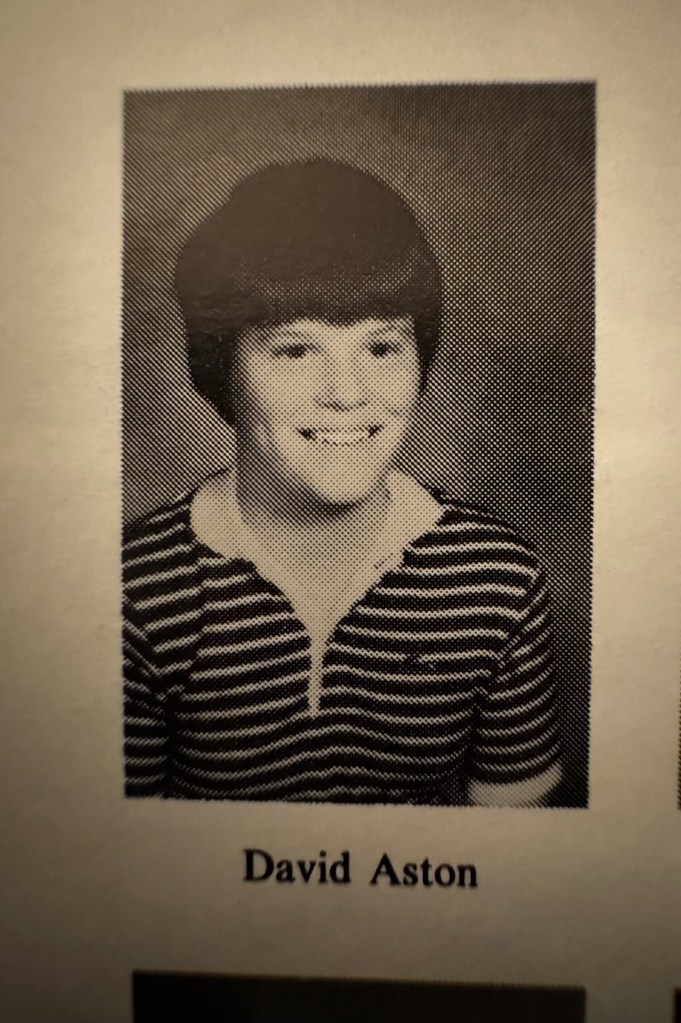
David Aston, an elementary PE teacher, said that his middle school PE teacher was his social studies teacher as well. “During our social studies class, my teacher said to us, ‘You should’ve seen Aston running like a house fire today.’ Getting props for my running, celebrating me in front of the class is a positive memory for me.” For David, his PE experience buoyed him.
Conversely, he described a less buoyant scenario. His high school PE teacher would take their sports-rules tests and fling them in the air. “It was a [jerk] move. Like 52-card pick up. We’d run around trying to find our test; we’d find a paper, and hand it to another kid, and could see their scores.”
Creating a Community With PE
Each of the four PE teachers talked about their commitment as teachers to celebrating successes and growth, being discrete with fitness data, and finding ways for all kids to feel successful.
Had I been born a few decades later, I would have loved PE. No more 200 mountain climbers. As a high school and middle school administrator for 18 years, PE classes I observed were filled with students smiling; grunting with effort, willingly challenging themselves; and feeling pride because they were excelling in something during the 50 minutes.
“I always try to make class fun,” Carol said. “I want kids to look forward to coming. When I was in school, I looked forward to PE. I try to make PE fun, even for the ones who are on the fence about it.”
How is fun achieved?
David said, “[In elementary school,] students have the most fun with a larger global game like capture the flag, that they’ve played over and over, and they’ve gained strategies for how to play the game.” With games like capture the flag, “kids have a choice of how they’re going to participate. Games like this give roles where kids are comfortable and they can feel successful, like guarding the goal or being the runner.”
Dave, who taught in elementary and middle schools, said, “Kids enjoyed what they were good at, such as games with a lot of different skills involved. Instead of a specific sport, games that involved throwing, dodging, stopping, and starting were best. The kids that weren’t sports savvy could be successful. Variety is key.”
As PE has changed for the better, since 2012, the Presidential Fitness programs have changed for the better as well, to reflect what educators have learned about social emotional wellbeing and lifelong fitness, with an emphasis on improved fitness rather than a benchmark.
“Of course, we want to recognize outstanding athletes. Nowadays, though, kids have so many outlets to be recognized; they’re already in club sports or afterschool sports,” Lisa said.
Lisa explained that PE programs moved away from the Presidential Fitness Test to an emphasis on “focused fitness: strength, endurance, cardio, nutrition, good decisions. Overall health,” she said. This is a more holistic approach to wellness—one that represents all abilities and needs.
“PE used to be preparatory for sports,” David said. “There wasn’t the idea of cooperative games or fun. Now, PE is a way to introduce sports for lifelong enjoyment. We’re playing pickleball, badminton, lacrosse, cooperative games. This includes being good humans, good learners. You have to be well-rounded: a good sport, a leader, a follower, a listener, and a doer.”
One memory about an elementary student with severe autism, “is above all the rest,” said Dave. “Every Friday, we would have a special needs group for a period. This one student had had poor PE experiences and couldn’t jump rope. [During this PE period,] we taught him to jump rope. At our end-of-year assembly, we had him jump rope in front of the entire school, with kids applauding him. His dad was a burly guy, and he was in tears watching this.”
The national goal for PE, kindergarten through twelfth grade, is to “develop physically literate individuals who have knowledge, skills, and confidence to enjoy a lifetime of healthful physical activity.” In our current administration, this holistic approach might regress to the fitness test and 85th percentile—rewarding athleticism over fitness improvement for all. As of November 2025, the standards have yet to be determined.
 Fedore Writer
Leave a comment