
As part of Bellarmine Prep’s Kindness Campaign, early February, students attended an assembly about bullying, ways to prevent it, and strategies to cope with stress from bullying. As a guest presenter, I took students through a variety of facts and suggestions for shifting away from bullying behavior.
Why does bullying occur?
A key reason is for peer approval. According to Emily Bazelon, author of Sticks and Stones, if people attack someone’s reputation, they increase their access to a friend group. I illustrated this with the film Mean Girls, based on Rosalind Wiseman’s non-fiction, Queen Bees and Wannabes, which discusses social hierarchies and clique dynamics.
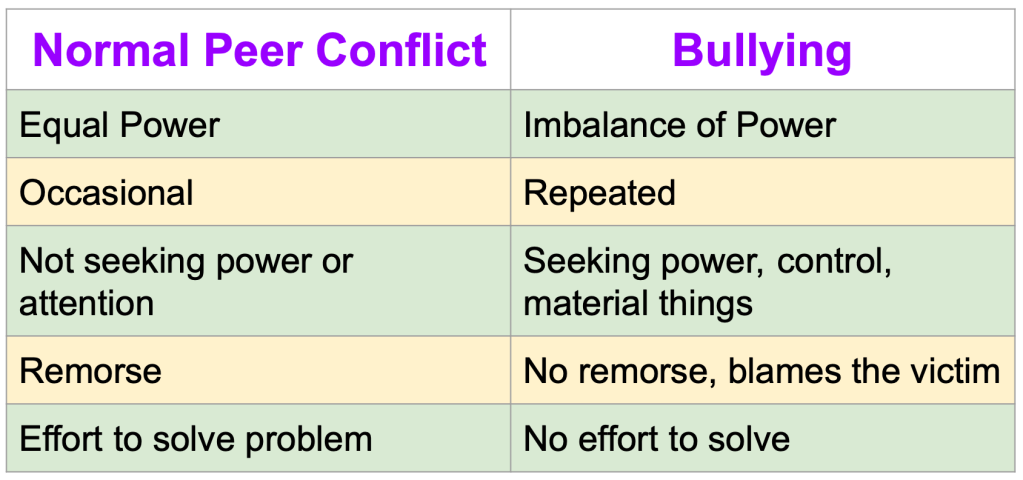
I also outlined the difference between conflict and bullying. Sometimes, we misinterpret bullying when it is peer conflict and vice versa.
How to help teens manage peer conflict and bullying?
“Awe improves well-being. Takes us out of self-focused and into a more integrated, social focus” (Haidt). What brings your child a sense of awe? Have a conversation about this and point out how shifting their brain gives them a sense of calm or happiness.
Another way to manage emotions is simply spending time in nature, which can be healing and pulls students away from their phones and daily stressors.
Change the game. Ask your child: What’s their current strategy for reacting to bullying? Are they going to do anything differently in the future to promote a different outcome?
To spark thinking and discussion at the assembly, I used the tag line from my young adult novel, Pigs and Flakes: Is it better to let gossip die down or strike back with fierceness?
If students ignored gossip or bullying in the past only to have it continue, how might they tap into their fierceness? I used the definition of being fierce as being brave, unstoppable, and kind, which is connected to students’ core values and their sense of self.
Conversely, if they’d previously talked back to the person bullying them and escalated the situation, how might they say nothing? Or simply say, “That’s not okay” about the bullying?
“When bystanders do stand up for victims, they stop bullies in their tracks as often as half the time” (Bazelon).
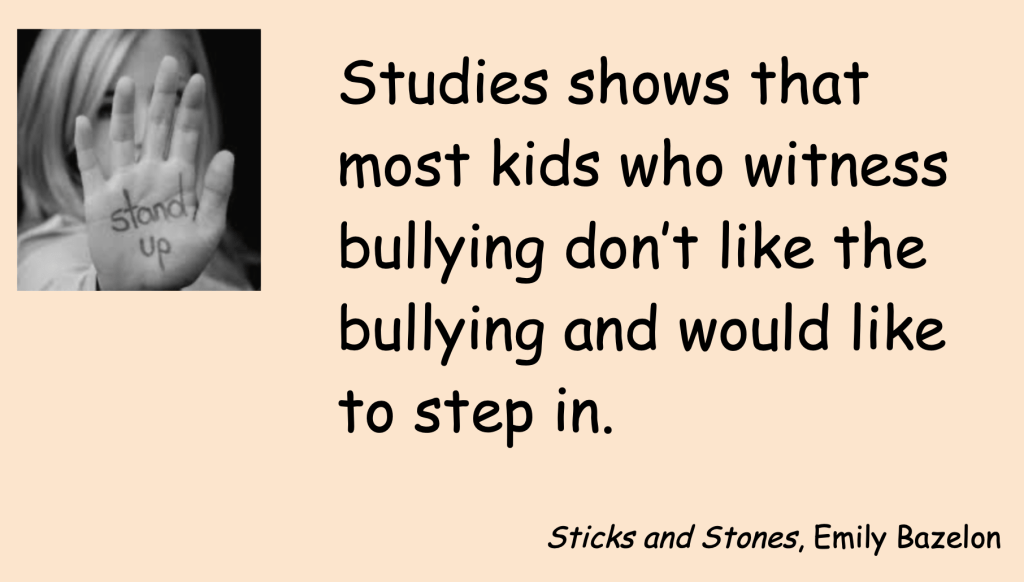
Students at the assembly learned that when peers provide an audience to the bullying, or worse, laugh, it prolongs the bullying. This includes social media. In addition, Bazelon stated in Sticks and Stones that “studies show that most kids who witness bullying don’t like the bullying and would like to step in.”
After the assembly, students completed a brief survey. In equal measure, students said they would:
- refrain from adding negative comments online,
- walk away if bullying was taking place in person, and
- check with the victim.
Half of the students said they’d be a leader by standing up for others and inviting others to sit with them at lunch or join other activities.
After the assembly, Dean of Students Mr. London said to me, “If only our students would just pause a moment before hitting send on social media, they’d avoid saying something that’s hurtful or disrespectful.” And they’d avoid a consequence for participating in bullying.
At home, ask your child how they might respond to a bully that feels safe and true to their identity.
Lastly, high-risk topics are made safer when teenagers discuss characters instead of themselves. On the Bellarmine survey, 20 ninth, tenth, and eleventh graders said they’d like to start a book club to discuss a variety of topics. Suggestions these students gave were Hunger Games; The Hate U Give; Ivan, the Silverback Gorilla; Pigs and Flakes; and Hitchhikers Guide to the Galaxy. A book club gives adolescents social time in person instead of socializing via their phones.
Talking about and discovering solutions is one way to curb an issue. Anywhere from 10 to 25 percent of teens say they’ve been involved in bullying—as participant or the victim. Let’s reduce that percentage to the lowest possible level by having conversations and holding each other accountable.
 Fedore Writer
Leave a comment