
I recently asked middle school students, “If you were writing your own life story, how likely is it that you would be the main character?” I told the students that I thought it should be 100 percent likely. Some students disagreed.
“It can’t always be about you,” one student said.
During another session, a student said, “It’s not like I’m Lebron James or anything.”
I replied, “All of you get to choose how you respond to what’s happening around you, making you the main character.” I also explained that being a celebrity is not required to be in charge of our lives.
When we read a book or watch a movie, we expect the main character who’s making mistakes to consider better decisions the next time. “No one wants to read about a character who always blames others or doesn’t try to make a situation better,” I said.
During the presentation, we talked about who or what their villains or antagonists are. Many students identified their villains as their own thoughts and actions. A handful listed their siblings, with a few comical descriptions. I wish I could share what they said, but I should keep their comments private. I encouraged students to ponder whether they’re making supporting characters into villains, like teachers who are trying to help them or siblings that could be allies.
I illustrated points with Frodo, from Lord of the Rings; and Katniss Everdeen, from Hunger Games, saying, “We love reading about characters who overcome obstacles, who act out of conviction, and who use their resources—including people—well.”
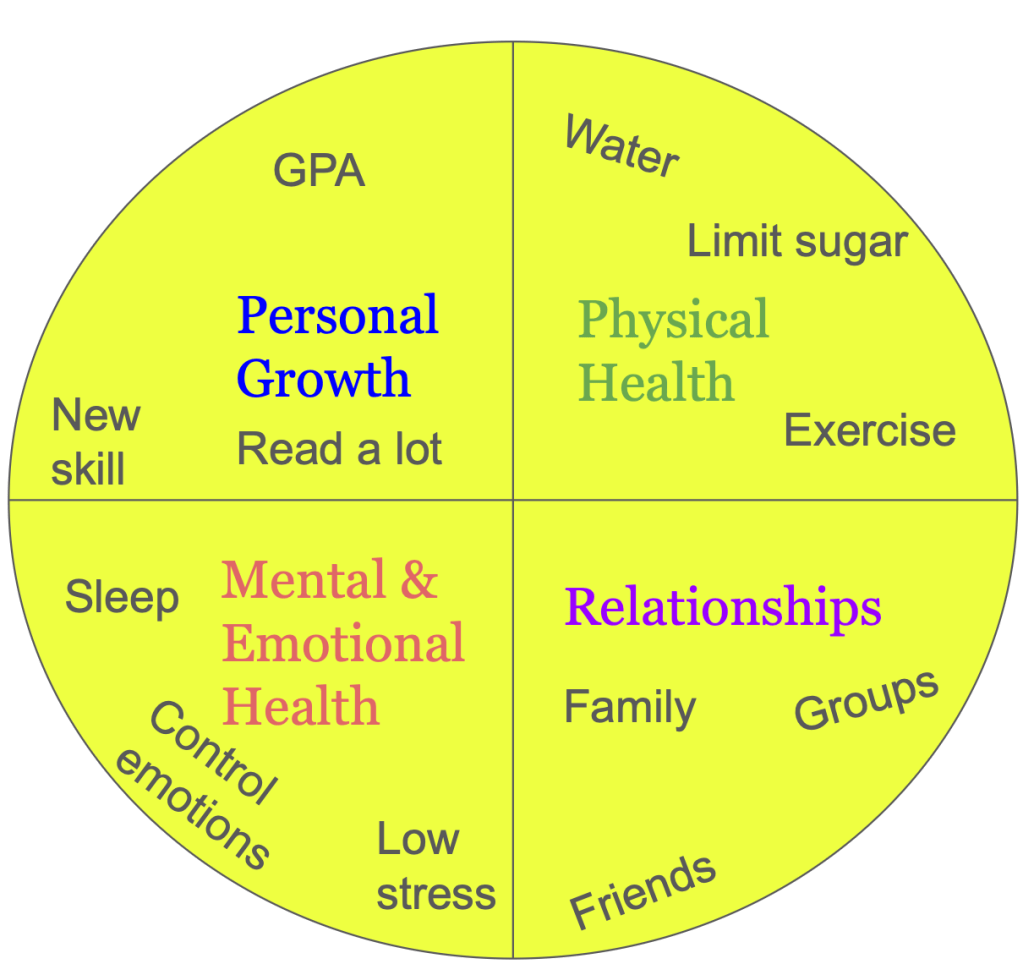
Students took stock of their strengths using four essentials: Personal Growth, Physical Health, Mental and Emotional Health, and Relationships.
Students have control over their physical health. For example, they can do sit-ups, pushups, and squats any day, they can drink enough water, and they can limit sugary snacks. I said, “You don’t need to drink a Red Bull—with 37 grams of sugar—for energy, when a good night’s rest and eating healthy food will give you energy.”
Students gasped when I suggested that they charge their devices in the kitchen instead of their bedrooms. “Your phone is a villain, keeping you from leading a full life.” A few facial expressions hinted that they might give this some consideration, especially since some students listed society’s expectations as a villain, namely what they see and read on their phones.
To galvanize the lesson, students chose one word that would guide them for the whole month of May. After identifying their strengths in all four areas, they decided on one small area to improve.
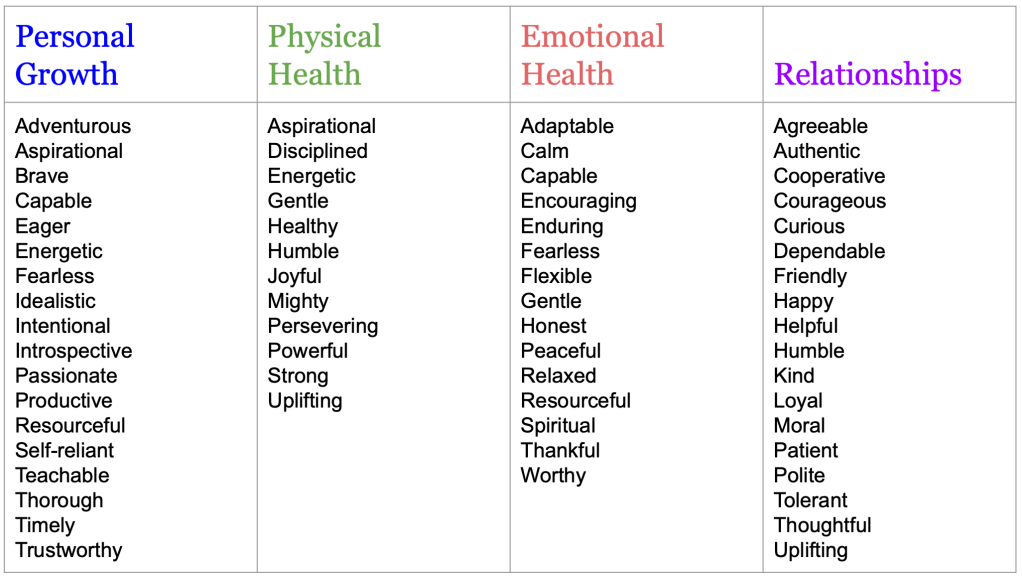
Starting with the phrase, “I am,” students chose their word.
The most popular word was Disciplined, with eight students selecting it. Capable, Fearless, Relaxed, and Persevering were chosen by six students each. Loyal and Uplifting were also valued, with five students each.
Other words included: Strong: 4, Mighty: 4, Brave: 4, Energetic: 3, Enduring: 2, Productive: 2, Self-Reliant: 2, Intentional: 2, and Powerful: 2.
Students’ focus on friendships and social skills was evident with these selections: Honest: 4, Humble: 3, Adaptable: 3, Peaceful: 3, Flexible: 3, Tolerant: 2, Kind: 2, Trustworthy: 2, Authentic: 1, Thoughtful: 1, Happy: 1, Thankful: 1, Dependable: 1, Patient: 1, Cooperative: 1, and Friendly: 1.
A few miscellaneous words appealed to one student each, such as Eager, Aspirational, Motivated, Calm, Healthy, Worthy, and Introspective.
Now it’s your turn.
On which essential area would you focus for the rest of May and all of June? What would be your “I am” word? And would you be introspective along the way, such as being aware of how often you needed to use your “I am” phrase to reset?
Most of the time, my word is Courageous. Publishing novels and writing blogs is not for the faint of heart because we authors open ourselves to criticism and disagreement. On the flip side, we gain fulfilling experiences such as facilitating discussions with middle schoolers. My word, “courage,” bolstered me to take risks.
What might your word bolster you to do?
Related blogs are: “Left to our own devices,” (about phone use) “Words: Push-Ups for our Brains,” and “Things that go ba-dump in the night” (about sugar consumption).
To subscribe to these blogs, hover near the lower right corner, and click subscribe.


Leave a Reply