
EVERY STORY HAS A STORY
Nothing like a publishing agent being interested in manuscript #3 to get me speedwriting like a bullet train (multiple electric-powered wheels, clean tracks, and a clear destination).
I pitched my third novel to an agent at the September 2025 Pacific NW Writers Conference and promised to have the manuscript to her by the following summer.
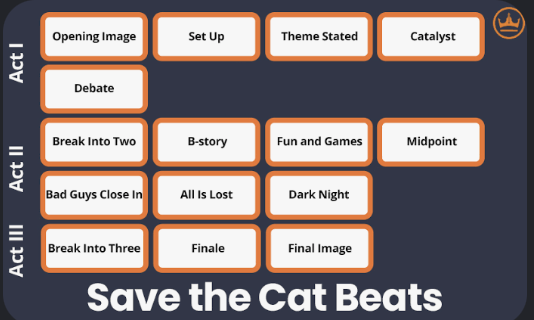
Six months prior, I had started dabbling with 400-Foot Drop, but, with determination, I wrote my plot outline in October 2025, using the “Save the Cat” template to provide me a guiding map (clean track and clear destination), and reached the finish line ten months later. (Image: Kindlepreneur)
This August, I submitted my synopsis, query letter, and full manuscript. Here’s an excerpt from my query letter:
“Circling back to the PNWA conference last September, I pitched my 68,500-word, psychological mystery, 400-Foot Drop. It’s August, and my manuscript is ready for your review, as promised.
“…As 18-year-old Darren’s father recovers in the hospital, Darren launches an investigation of his mom’s fall from a ledge, seeking help from two friends and a retired sheriff.
“During my pitch, you and I discussed the cross-over potential of 400-Foot Drop, from young adult to adult contemporary fiction, which is especially strong because some of the chapters are from a retired sheriff’s POV.”
Now, I patiently wait for a reply from the agent, hopefully by November, knowing that only 1 percent of authors who seek a contract with traditional publishers achieve that goal.
SERIES-LY?
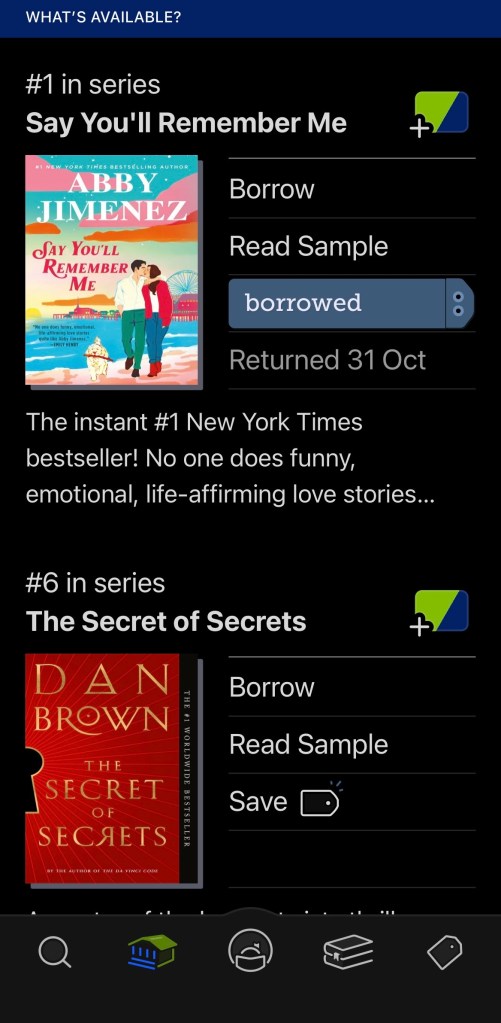
When I download books from Libby (library app) or purchase eBooks, I prefer stand-alone titles. Maybe it’s my personality flaw of not wanting to be stuck with one thing or a quiet protest of being manipulated to purchase or borrow a series of books.
But as I learn more about book marketing, writing a sequel is part of the business. I’m hearing from a few readers spurring me to a sequel to Pigs and Flakes. I’m pretty sure readers want Peter and Gabby to get married. (Me too, but we’ll see.)
I also predict that it’ll be necessary to promise a sequel to 400-Foot Drop to get the agent interested in representing me. Let’s face it: many authors are clamoring for contracts, so the competition is fierce.
In the meantime, my brain has been churning on possible story lines, villains, conflicts, and triumphs for these sequels.
UPCOMING BOOK TALKS
Mon., October 5: Village Books
- 6-7pm,
- 1200 11th St., Bellingham, WA
- Click here to reserve a spot for “Turn on Your Lightbulb.”
Sat., October 10: Books and Bakery
- 1-1:30pm features “Walk Away or Take a Stand?”
- 1:30-3pm Drop in
- 513 N Adams, Carroll, Iowa.
Sat., October 17: Magpie Books
- 3-5pm,
- 3-3:30pm features “Walk Away or Take a Stand?”
- 1233 Commerce Ave., Longview, WA.
WORD-LOVERS’ GAME IDEAS
I was at a party recently that offered different activities, including board games, pickleball, painting tiles, and great food. I was struck with how these options gave introverts the opportunity to join without overloading themselves and extroverts plenty of opportunities to interact with people.
Quiet Arty Moment
A person brought art supplies and tiles that he was going to use on a home project. This option required a kiln, so probably more elaborate than most of us could accommodate. Inspired, I recently bought a box of blank cards and envelopes. At our next family gathering, I’ll set out pencils and pens and ask people to create one greeting card each. Seems like a cool way to encourage everyone to reach out with a personal note.
Creative Use of Scrabble Letters
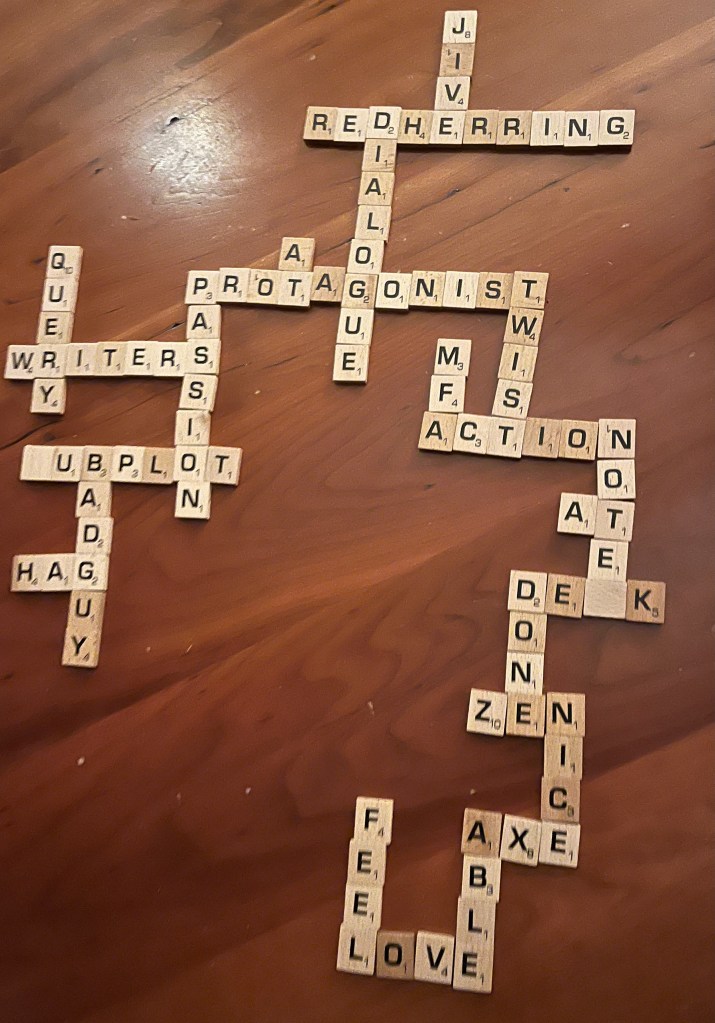
At a writer’s retreat this past spring, our host laid out Scrabble pieces and, and for a day or two, participants could create a grid, exercising their imagination and taking a break from the hub bub.
Fishbowl
This is a form of Password. All you’ll need are:
- Small pieces of paper,
- Pens or pencils,
- Timer (phone),
- A bowl large enough to hold all the pieces of paper,
- Score sheet (piece of paper), and
- At least 6 people for the game to be lively and fun.
Divide into two teams.
Give everyone 5 small pieces of paper each. Ask each person to write one noun on each piece of paper and fold the 5 pieces of paper in half.
Place all folded papers in a bowl. (If you have 6 people playing, you should have 30 folded pieces of paper.)
Round One: Start the timer for one minute. The reader/prompter can describe the word without saying the word. When a team member says the correct word, the reader/prompter saves that piece of paper, then draws another from the bowl, describing the next word.
Example: The word is “soup,” and the reader says, “You can eat this with a spoon… It’s usually hot.” And a team member says, “Soup.” Then, you move on to the next word.
All team members should listen and pay attention. You’ll see why in a moment. When the one-minute timer chimes, the other team members get a turn.
A game facilitator records how many words were guessed in the minute. Each reader/prompter keeps the pieces of paper with them until all words in the bowl are read and guessed.
Round Two: Charades. Put all the folded words back into the bowl.
Start the timer for one minute and one person from one team acts out the word using rules for Charades. Record the number of words guessed in one minute and repeat steps for the other team until all the words are used.
Round Three: One word. Put all the folded words back into the bowl.
Start the timer. The reader/prompter can use only one word to get the team to say the word written on the paper.
One advantage is if team members remember the words from the previous two rounds, so it’s best to pay close attention to each reader/prompter.
Interested in more frequent FedoreWriter updates? Follow on Facebook and/or Instagram.


Leave a Reply